A deficiency that is silent
Omega3
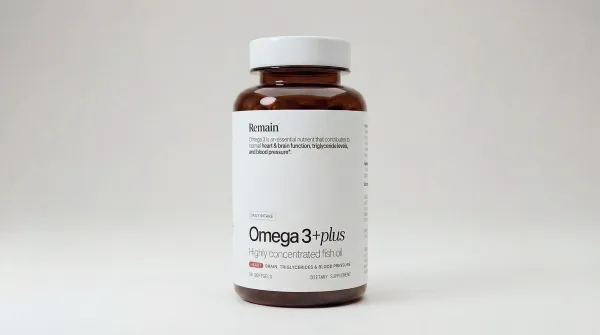

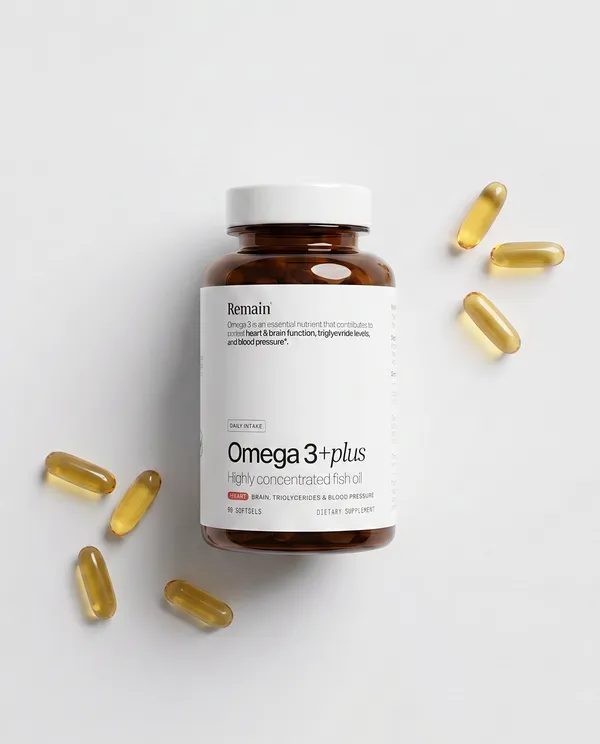







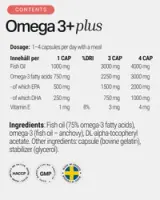


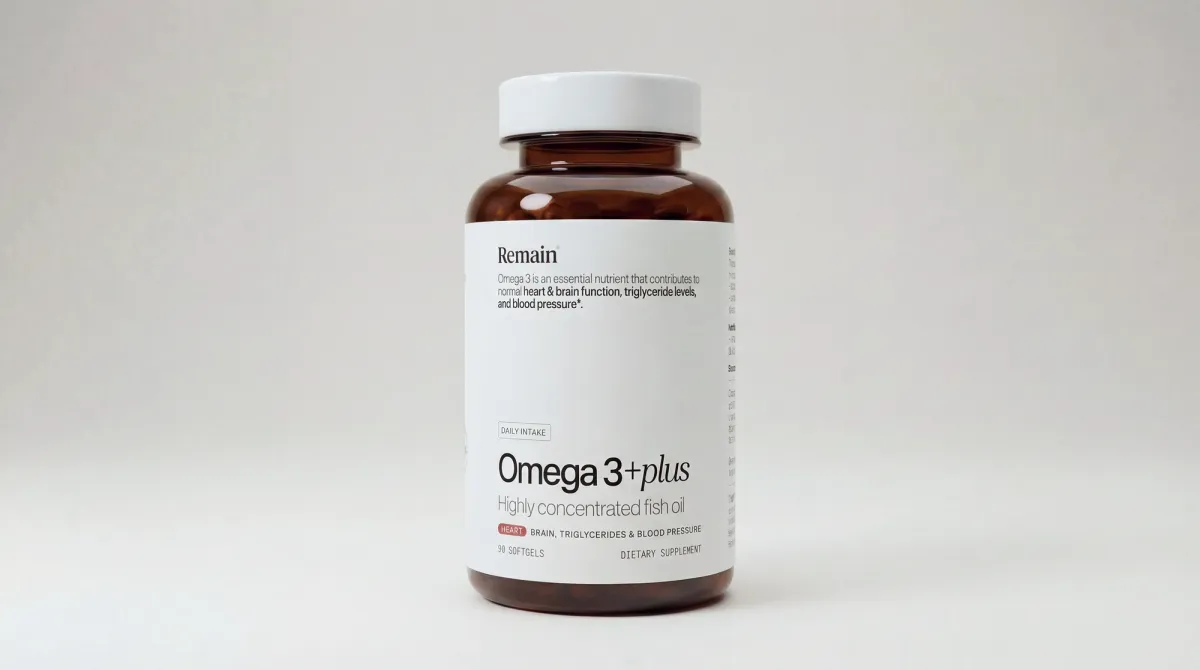

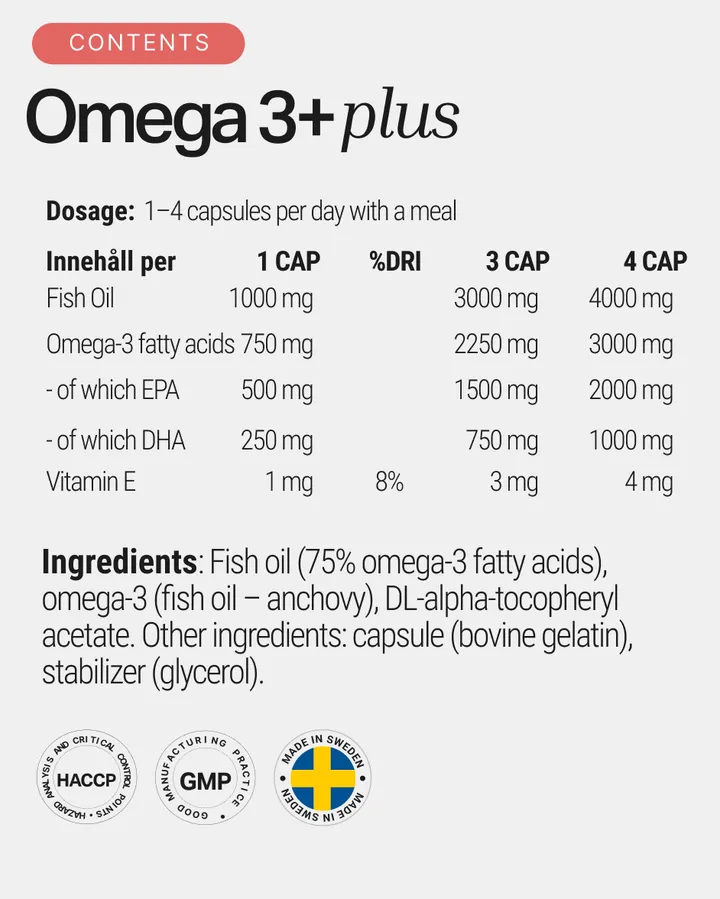


Most omega-3 supplements provide 300 mg of active omega-3 per capsule. That's not enough, research indicates that the body needs at least 1,000 mg EPA per day to measurably affect heart, brain and inflammation.
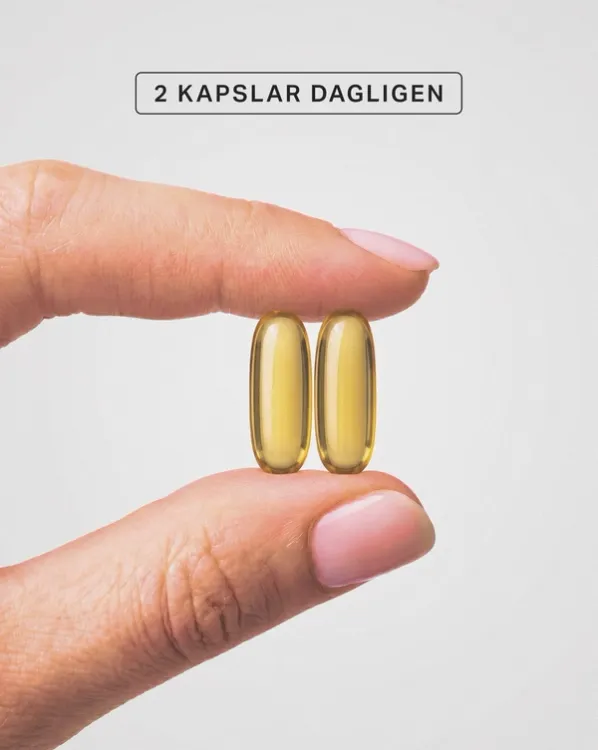
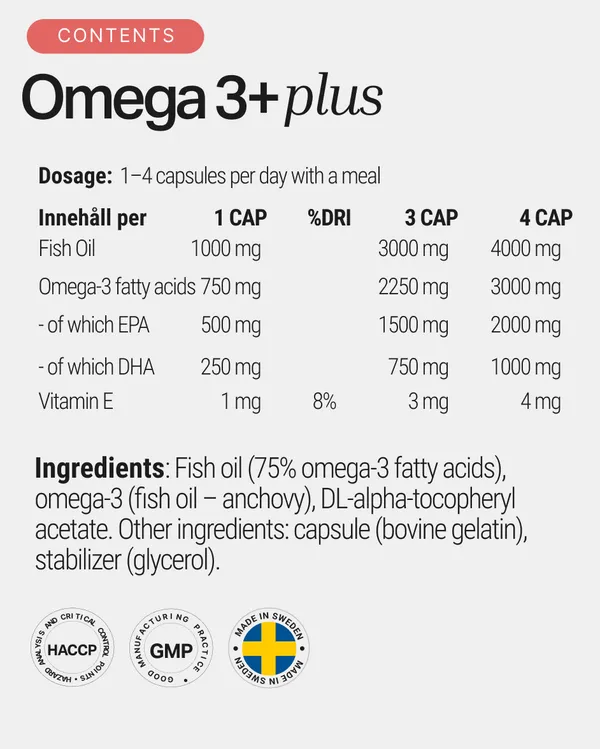
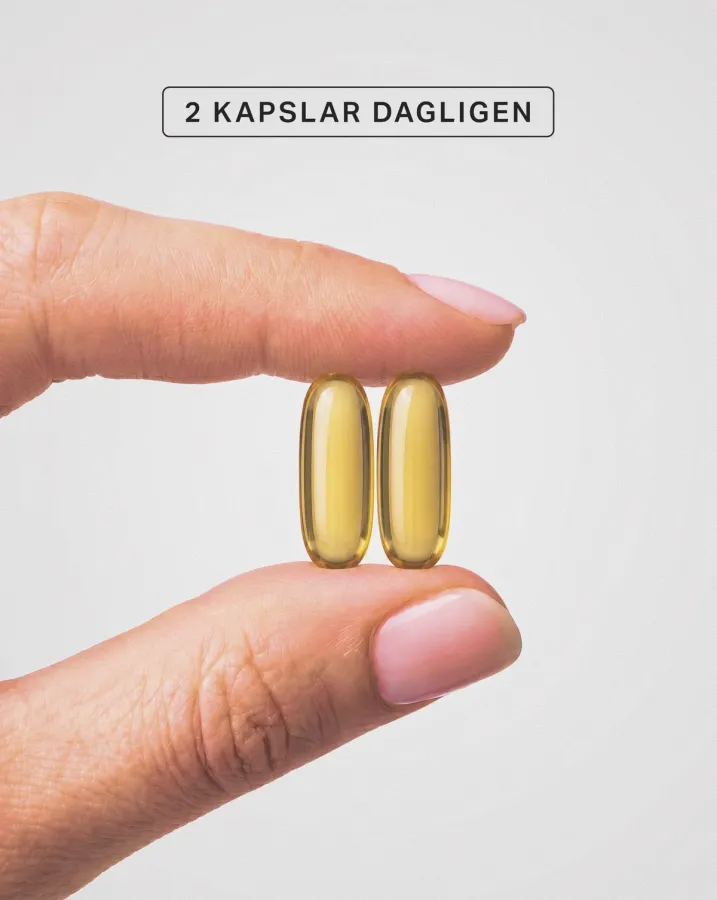
Omega+Plus delivers 750 mg EPA+DHA in each capsule. We recommend taking 2 capsules daily which provides 1,000 mg EPA and 500 mg DHA in a dose most people can maintain long-term. If you want a higher dose, we recommend consulting your doctor.
1,000 mg EPA + 500 mg DHA in two caps
2.5× more omega-3 per capsule
Supports triglycerides & blood pressure
Supports three organ systems daily
Fish oil from one of the purest sources
Recommendation 2 capsules daily
Subscribe and Save

One-Time Buy


Omega3
DHA builds the membranes in your neurons — the body doesn't produce enough on its own. Brain volume begins to decrease after age 40, and higher omega-3 levels are linked to larger hippocampus and total brain volume.
Low omega-3 intake is one of the most important dietary factors linked to cardiovascular disease. Supplements lower both IL-6 and CRP — key markers of inflammation in the vascular wall.
Without sufficient EPA, the body lacks the building blocks it needs to end inflammatory processes. When resolution fails, inflammation can become chronic — and is linked to increased disease risk over the years.
Energy that fails. Focus that wanders. Most people in the Nordic countries don't reach the recommended intake of EPA and DHA — and low omega-3 status is classified as a risk factor for suboptimal health.

In brief
One capsule — an evidence-based dose. More than twice as much active omega-3 as most supplements.
Pure source with naturally high concentration of EPA and DHA. HACCP-certified production.
Manufactured according to Good Manufacturing Practice. Third-party tested for purity and potency.
Protects fatty acids against oxidation. Keeps the oil stable and effective throughout its shelf life.
Omega+Plus provides 750 mg EPA+DHA in a single capsule — more than double the amount of the median supplement on the market, where a survey of 255 products showed median values of 340 mg EPA and 270 mg DHA per daily dose. EFSA recommends 250–500 mg EPA+DHA per day for adults based on cardiovascular risk — and meta-analysis of 40 studies with over 135,000 participants shows that the protective effect increases dose-dependently. Doses up to 5,000 mg per day are safe for adults — Omega+Plus stays well below that level even at full dose.
Omega+Plus
750 mg
Typical supplement
300 mg
Recommended minimum
250 mg
EPA and DHA aren't just 'good fats'. They integrate into the body and change how it functions — from the inside.


EPA and DHA integrate into every cell membrane. This changes the membrane's flexibility and improves how the cell communicates with its environment.

DHA makes up a large part of the brain's fatty acids. It supports synaptic plasticity and protects against neuroinflammation. A meta-analysis of 9,660 participants showed improved executive function with intake over 500 mg/day.

EPA is converted to resolvins and protectins — lipid mediators that actively resolve inflammation. They help the body end the inflammatory process naturally — without shutting down the immune system.

Omega-3 lowers triglycerides and reduces the risk of heart attack. A meta-analysis of 134,144 participants showed significantly reduced cardiovascular risk.
Omega-3 is not a fast-acting supplement — it builds reserves. Here's what happens from the first capsule to day 60.







Stories from customers
Works out three times a week. Eats fish when he can. Thought his omega-3 was sufficient. Blood data showed an omega-3 index of 5.2% — in the low category, where the risk of premature death is significantly higher than at desirable levels.
Despite fishing tradition, despite awareness. Sweden ranks in the middle on the global omega-3 map — only Iceland, Norway and Finland reach desirable levels. Most Nordic adults have an omega-3 index below 8%.
Omega-3 builds reserves — not quick fixes. Higher levels in the blood are linked to lower risk of premature death — but protection builds up over months, not days. Start today.
TDB
Have more questions? Visit our help center
5.00
/ 5
Based on 2 reviews
Share your experience. Get 10 EUR in credits!